
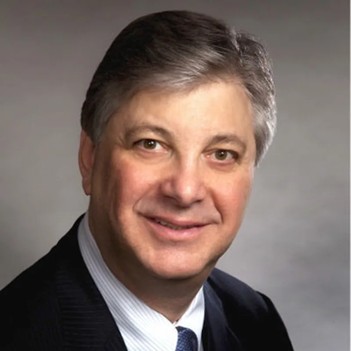
Dr. Daniel Pompa, C4S Speaker
Dentist Lecture
- Friday Morning – Part I: Actions and Algorithms for Medical Emergencies 2025: Multiple Actions to Prevent a Medical Crisis in Your Office
- Friday Afternoon – Part II: Actions and Algorithms for Medical Emergencies 2025: Updated Medications and the Routes of Administration Used When Treating a Medical Emergency
- Saturday Morning – To Pull or Not to Pull: What Alternative Treatment Options Should Be Considered When the “Initial” Endodontic (Surgical or Non-Surgical) Failure Occurs?
Course Details
Part I - Actions and Algorithms for Medical Emergencies 2025: Multiple Actions to Prevent a Medical Crisis in Your Office
There are more medically compromised patients coming to our offices than ever before. Acquire “up to the minute” actions for dealing with a medical emergency while challenging preconceived or outdated ideas. A step-by-step medical approach using basic physical diagnostic methods is reviewed, giving the attendee a clear understanding of these medical findings. The Part I (morning session) will focus on how we react (physiologically) to a medical crisis in our office and how to do it better with proven techniques that when followed will more likely result in a positive outcome. Upon request, attendees will receive and review color-coded instructional cards depicting the most common life-threatening situations with algorithms providing an easy-to-follow action plan for both dentist and team members. We will also review the legal and moral obligations that are presented during a medical crisis.
Prizes given at each session include Auto BP Monitors, Pulse Oximeters, and Glucometers as well as Nebulizers and an Epi Pen set will be given out as prizes throughout the AM and PM session to those who answer questions directly related to the material presented in the presentations.
Course Objectives:
- Learn (mentally and physiologically) how we respond in a crisis situation along with a new approach to do it better.
- Discover three simple chair side non-invasive tests to help avoid a crisis situation.
- Understand that “Method Over Memory” is the key to having a good outcome (following a plan vs. using your memory) – accomplished by using color-coded cards (given to each participant).
- Recognize the most frequent life-threatening emergencies and when and why they occur.
- Be aware of the legal and moral obligations presented by a medical emergency.
Part II - Actions and Algorithms for Medical Emergencies 2025: Updated Medications and the Routes of Administration Used When Treating a Medical Emergency
The Part 2 (afternoon session) will focus more on the actual emergencies and the newest drugs as well as the new routes of administration for these drugs. Indications for emergency drug use and proper dosages will be delineated, as well as demonstrating how to assemble and maintain an ideal emergency drug kit. We will demonstrate how to use these along with the use of multiple medical equipment (BP Monitor, Pulse Oximeter and Glucometer*) which will be shown for participants to develop new skill sets that can prove to be vital in saving a life. Upon request, attendees will receive and review color-coded instructional cards depicting the most common life-threatening situations with algorithms providing an easy-to-follow action plan for both dentist and team members. We will also review the legal and moral obligations that are presented during a medical crisis.
Prizes given at each session include Auto BP Monitors, Pulse Oximeters, and Glucometers as well as Nebulizers and an Epi Pen set will be given out as prizes throughout the AM and PM session to those who answer questions directly related to the material presented in the presentations.
Course Objectives:
- Learn how to develop a plan for the office team when dealing with a crisis event.
- Step by step approach to create and maintain your own emergency kit.
- Become familiar with the most recent and updated medications that can be used to treat a medical emergency in your office.
- Review a systematic approach to treat life-threatening scenarios with the use of simple equipment to achieve a successful outcome – i.e., pulse oximeter, glucometer and BP monitors (all given as multiple prizes throughout the lecture).
- Determine when to administer the essential “Top 10 Emergency Drugs” (along with a review of all these medications and their indications and contraindications).
- Know when and how to conduct mock emergency drills.
To Pull or Not to Pull: What Alternative Treatment Options Should Be Considered When the “Initial” Endodontic (surgical or non-surgical) Failure Occurs?
With the introduction of new techniques and a systematic approach for the diagnosis and treatment of compromised teeth, the attendee will be able to more accurately determine the long term prognosis with multiple treatment options. Recent advancements in both surgical and non-surgical procedures have resulted in success rates that can be equivalent to the success rates for implant replacement.
Multiple approaches to reduce the incidence of periimplantitis will be reviewed as well as new Prosthetic and Surgical approaches for interdental papilla enhancement. We will review a unique approach for previously thought of non-restorable teeth and show long term positive results. Treatment planning with an emphasis on bone physiology and physics will be reviewed.
Course Objectives:
- Differentiate between endo/perio vs. perio/endo lesions and how the difference impacts long term prognosis.
- Learn the statistical difference between long term prognosis of root canal vs. apical surgery vs. removal and implant placement.
- Develop awareness that many generally accepted principles do not always hold up overtime i.e. long-term prognosis for hemi-sected teeth.
- Know when it is not ideal to remove a tooth and replace it with an implant.
- Recognize how the location of a sinus tract is a key diagnostic indicator.
- Appreciate how the use of a surgical guide can reduce complications.
- Treatment planning approaches using principles of physics and bone physiology.
- See how incorporating sinus augmentation changes treatment planning.
About the Speaker
Dr. Daniel Pompa, Oral and Maxillofacial Surgeon, is an internationally recognized speaker providing Continuing Education for both Dental and Medical Professionals offering multiple topics. Dr. Pompa is also an inventor and author having been issued the first patent for a Surgical Guide using CT technology. He has authored numerous articles published in JADA, Dentistry Today and in the NYS Journal of the Academy of General Dentistry. He has been cited as a "Leader in Continuing Education" by Dentistry Today for the last eight years in a row. His Medical Emergencies lecture has been featured as a Seminar Series Program for the ADA and has now been presented at 15 U.S. Dental Schools, throughout Canada, and in Europe and South America.
